
All comments attributed to Paul Patel, Product Manager, Merrychef UK
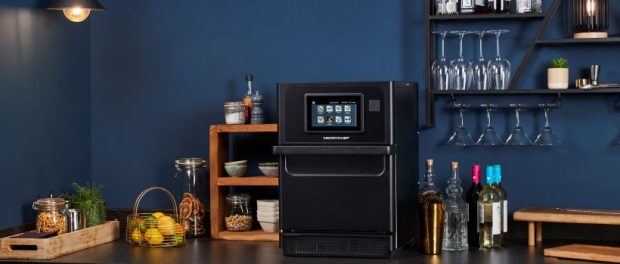
Why simplicity is becoming the most valuable kitchen innovation tool
Kitchen innovation has evolved significantly in recent years. Operators are not simply looking for equipment with more features; they are looking for solutions that help them run more efficient, consistent and profitable operations.
In a sector facing labour shortages, rising costs and increasing pressure on kitchen space, operational simplicity has become one of the most valuable innovations of all and can give operators a competitive edge.
The businesses that are succeeding today are often those that have found ways to remove unnecessary complexity from their operations. Whether it is reducing training requirements, maintaining consistency across multiple sites or making better use of limited space, simplifying day-to-day processes allows operators to focus on what matters most: delivering great food and great customer experiences.
The new labour challenge
When discussing labour challenges, recruitment often dominates the conversation. But recruitment is only part of the picture. Staff retention, onboarding and maintaining consistency across changing teams are equally important considerations.
That means equipment needs to be designed for the reality of modern kitchens, not the ideal scenario of having experienced chefs on every shift.
The benchmark is no longer whether the most experienced member of the team can get the best from a piece of equipment. It is whether every member of the team can use it confidently and consistently.
Simple, intuitive controls, guided cooking programmes and visual interfaces all help reduce training time while ensuring food is delivered to the same standard every time. Rather than relying on individual judgement or experience, operators can create repeatable processes that improve consistency and reduce pressure on busy teams.
Reducing complexity also reduces training requirements. In an industry where turnover can be high and labour costs remain under scrutiny, shortening the learning curve can make a significant difference to operational performance.
Consistency drives confidence
Consistency remains one of the hospitality industry’s most important measures of success in hospitality.
Customers expect the same experience whether they visit on a Monday morning or a Saturday evening. For multi-site operators, that expectation applies across every location. Yet consistency becomes harder to maintain as menus expand, teams change and service pressures increase.
Equipment has an important role to play here, but not because it adds more capability. Its real value lies in removing variation.
Pre-programmed cooking profiles, visual interfaces and connected menu management help ensure dishes are prepared and served consistently, regardless of who is operating the equipment.
Solutions such as KitchenConnect® allow operators to manually update and upload menus and cooking programmes remotely across multiple sites, helping maintain standards while reducing operational workload.
Make every square foot work harder
Space is becoming a valuable commodity in hospitality. With property costs rising and operators looking for new revenue opportunities, kitchens are expected to deliver more output from smaller footprints.
Rather than filling kitchens with multiple specialist appliances, many operators are moving towards multifunctional solutions that maximise productivity while minimising complexity.
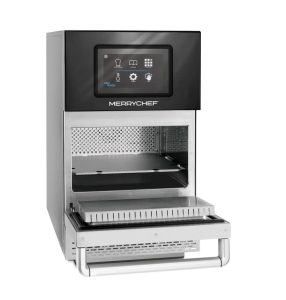
High speed cooking technology, such as the Merrychef conneX® range reflects this trend and has become an important part of that shift. A single unit should have the ability to cook, toast, grill and reheat a wide variety of menu items, allowing operators to introduce new dayparts, expand grab-and-go offers or test seasonal dishes without fundamentally changing their kitchen layout.
The result is greater menu flexibility, increased revenue opportunities and a simpler operation.
Simplicity creates opportunities
There is sometimes a misconception that simplifying operations limits creativity. In reality, the opposite is often true.
When teams spend less time managing equipment, training and operational processes, they have more capacity to focus on developing menus, improving service and responding to changing customer demand.
The same applies to technology. The most valuable innovations are not necessarily those with the longest list of features, but those that make day-to-day operations easier. Whether that is reducing training requirements, improving consistency or making menu changes simpler to implement, technology should remove barriers rather than create them.
This is particularly important at a time when consumer preferences continue to change rapidly and operators must remain agile to stay relevant.
Looking ahead
The future of kitchen technology is often discussed in terms of speed, automation and connectivity. Yes, all of those elements are important, but they are only valuable if they solve genuine operational challenges.
Looking ahead, the most successful kitchen innovations will be those that help operators do more with less. Less space. Less training. Less complexity. Less operational friction.
That does not mean lowering standards. Quite the opposite. It means creating kitchens that are more resilient, more adaptable and better equipped to deliver great food consistently, regardless of the challenges facing the industry.
In an era where every square foot, every labour hour and every menu decision matter, simplicity can prove to be the most valuable innovation of all.
Leave a comment